Some crossword clues whisper, others shout, but then there are those that deliver a profound, cerebral challenge, forcing you to dig deep into your mental archives. When ‘Kant’ appears in a
crossword clue
, you know you’re in for more than just a simple word association. It’s a signal to prepare for a foray into philosophy, language, and the precise, often demanding, world of Immanuel Kant.
This particular
crossword clue
– ‘Kant’s “no”‘ – is a masterclass in economy and depth. On the surface, it seems straightforward: a simple negation. But for anyone familiar with the Königsberg philosopher, a ‘no’ from Kant is rarely just a ‘no’. It’s loaded with systematic thought, careful distinctions, and the rigorous application of reason. It’s not merely about a simple denial or a shake of the head; it delves into the linguistic and intellectual landscape of one of history’s most pivotal thinkers. This isn’t your everyday, run-of-the-mill
crossword clue
; it’s a philosophical puzzle wrapped in a linguistic one.
The beauty of such a
crossword clue
lies in the layers of knowledge it taps into. First, there’s the immediate recognition of Kant himself – his place in the Enlightenment, his work on ethics, metaphysics, and epistemology. Then, there’s the specific notion of a ‘no’. In Kant’s vast body of work, a ‘no’ could signify a rejection of pure reason’s overreach, a denial of empirical claims that transcend possible experience, or the unacceptability of an action that violates the categorical imperative. His philosophy is replete with distinctions, limitations, and the careful demarcation of what can and cannot be known, what is and is not moral. His ‘no’ isn’t just an absence; it’s often a profound boundary, a statement of impossibility or impermissibility within his rigorous system.
But the brilliance of this
crossword clue
doesn’t stop at the philosophical concept. It also nudges you towards the practical consideration of language. For those deep into the realm of
crossword clues
that demand a grasp of foreign terms, this one might immediately trigger a thought process about where Kant’s seminal works originated. What language did this intellectual giant use to articulate his revolutionary ideas about duty, freedom, and the nature of reality? When we consider a philosopher’s ‘no’, especially one of Kant’s stature, it’s natural to think of the exact word he would have employed in his own writings. This specific element of the
crossword clue
transforms it from a simple philosophical reference into a linguistic quest, a hunt for the precise term.
The joy of cracking such a
crossword clue
lies in the journey it takes you on: first, recognizing Kant’s towering intellect, then understanding the ‘no’ within his intricate philosophical framework, and finally, bridging that understanding to a precise linguistic term that fits neatly into the grid. It’s a powerful reminder that even the shortest
crossword clue
can open doors to entire worlds of thought and knowledge. This ‘Kant’s “no”‘
crossword clue
is a prime example of how puzzles elevate our thinking, pushing us beyond the obvious to explore the nuances of language and philosophy. It’s a reminder that even a simple ‘no’ can carry immense intellectual weight. Successfully navigating such a
crossword clue
leaves you not just with a filled square, but with a deeper appreciation for the intricate dance between words and ideas.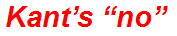
Available Answers:
NEIN.
Last seen on the crossword puzzle: 0829-25 NY Times Crossword 29 Aug 25, Friday